HP Sustainability – UC Berkeley MEng
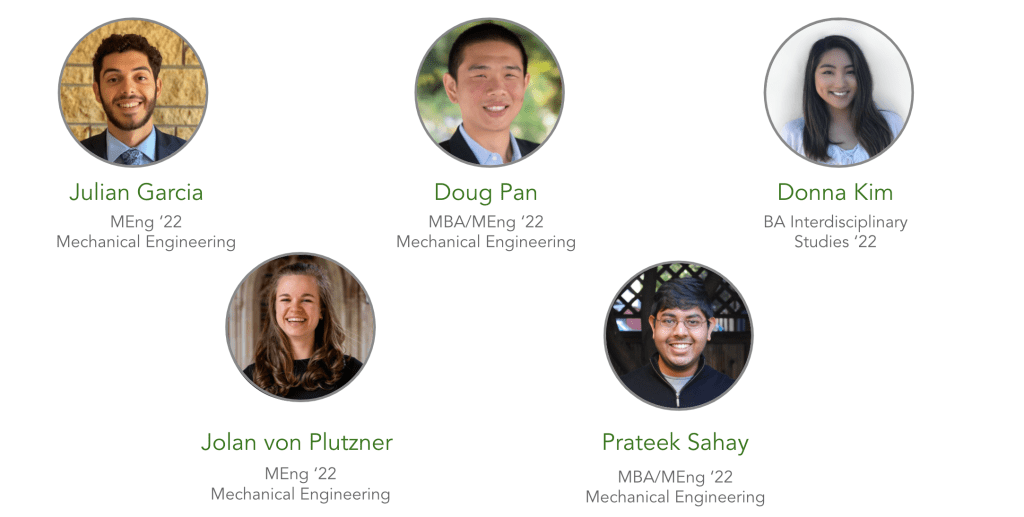
During the Fall 2021 semester, our team of five UC Berkeley Master of Engineering and MBA candidates followed the four-step human centered design method process to develop a solution to a topical problem:
How might we notify and encourage customers that HP offers sustainable solutions of the accessories they are wanting to purchase?
identify
understand
conceptualize
realize
How Might We Statements
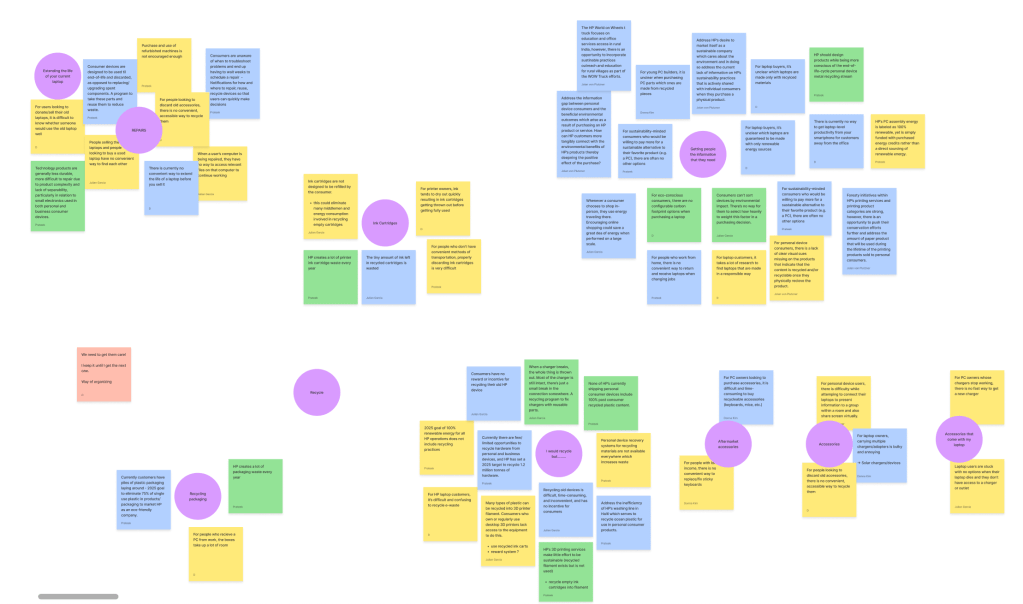
My contributions took effect through each of the design stages, beginning with my development of unique and out-of-the-box How Might We statements targeting our ideal market opportunity. During the product-opportunity-gap clustering exercise, I championed the collection of statements that fell within the ‘inform the customer’ umbrella and made a case for its pertinence as a problem-space.
Concept Sorting and Analysis
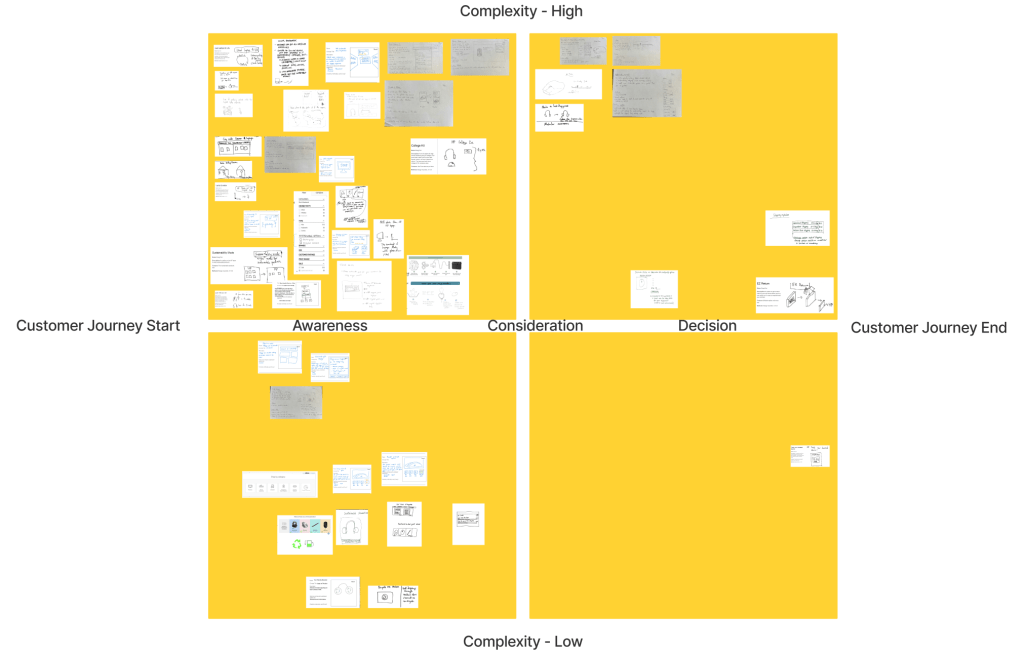
Our team ultimately decided to pursue the ‘Inform the Customer’ theme, leading to fascinating concept exploration during the understand phase. When the question surfaced about how to filter and analyze the various ideas we had each penned up during a Hand-Brain idea generation exercise, I suggested we create a 2×2 matrix. This matrix, seen left, maps our concepts through the user purchasing journey and considers complexity of implementation. We concluded that the customer’s initial awareness and product consideration were the richest areas for further exploration thanks to this visualization technique.
Webstore Mapping
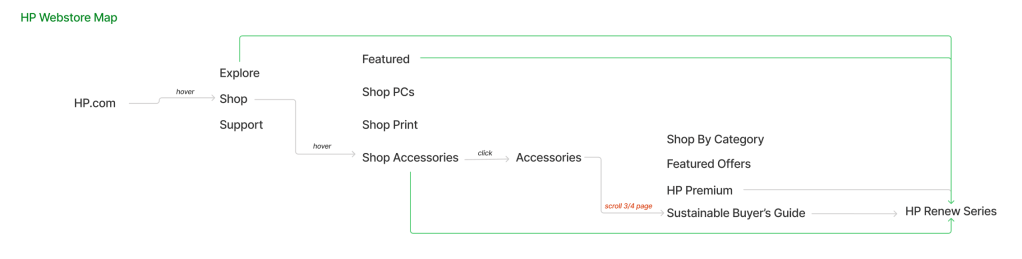
Following this line of thinking, I then took responsibility for developing an accurate mapping of the current HP webstore to understand the customer journey and clearly call out both pain points and areas for potential improvement. This mapping, shown below, allowed our team to pinpoint the project focus of providing customers with a more streamlined and informative method of purchase and learning about HP sustainability initiatives.
Concept Prototyping
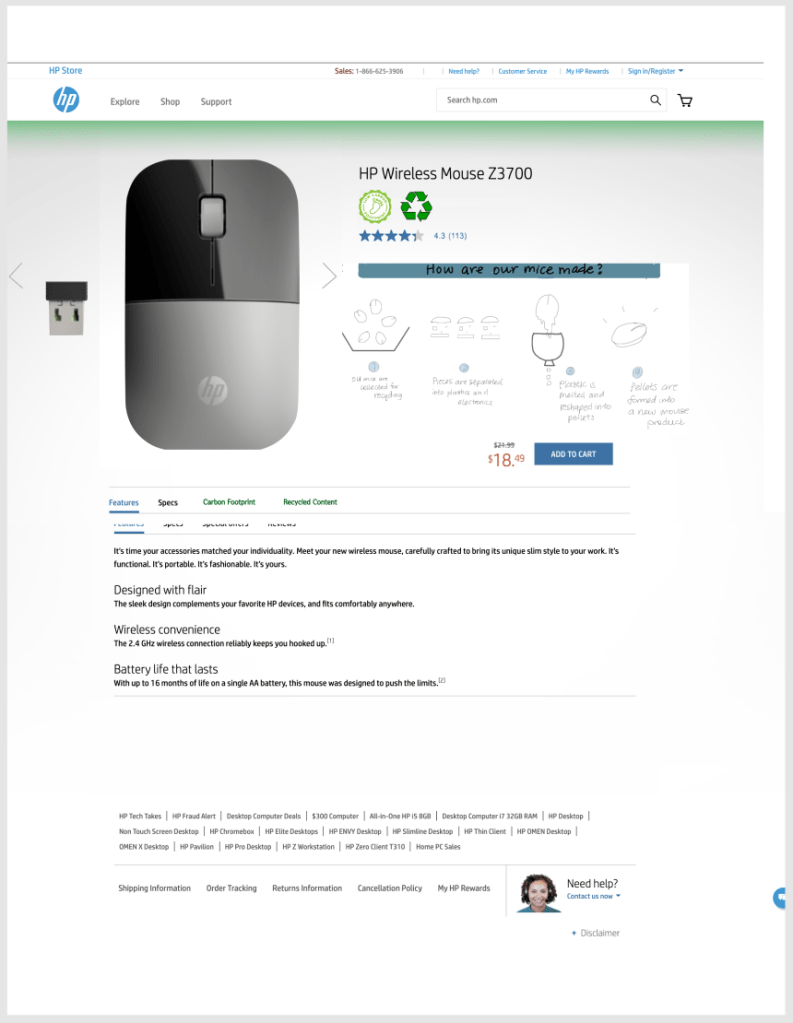
During the final phase of the project, I contributed my design perspective and skills through multiple iterations of accessory webstore prototype pages. Branching off from HP’s current webstore aesthetic, I began by incorporating sustainability cues and information in place of the cluttered and unnecessary text which is currently included with every product description.
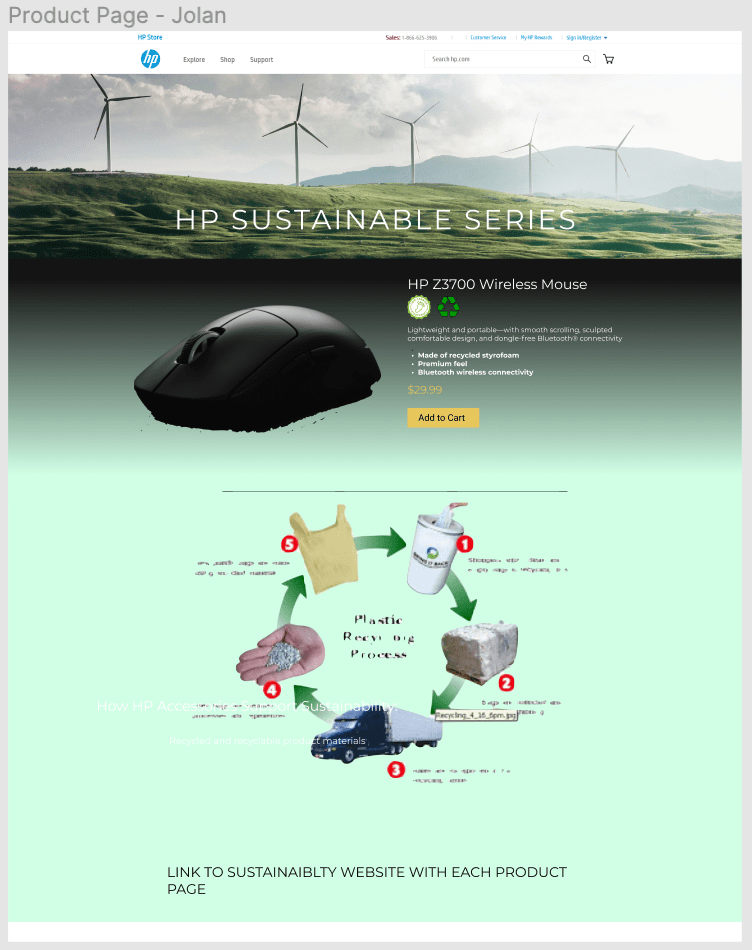
The second prototype features a more luxurious feel introduced by my teammate Prateek. Inspired by his direction, I took it further with a new color scheme and a dramatic shift in the overall page layout. Capitalizing on the newly generated space, it was now possible to include more substantial graphics to replace the excessive wordiness found on HP’s current website. This prototype also begins to shift HP’s aesthetic towards a more modern feel.
Each of these concepts were combined into a progressive group prototype which I altered to include a green theme, and downselected the number of options the customer must parse in order to make a decision. A more cohesive, smooth, streamlined and informative page now began to take shape.
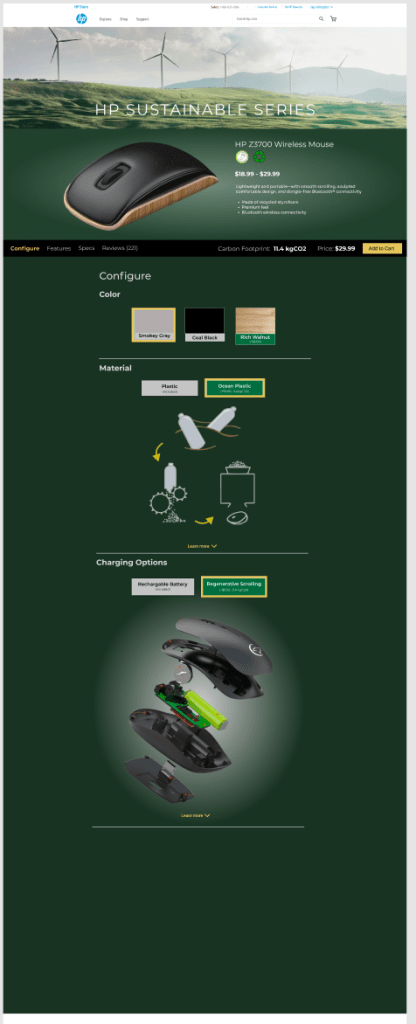
Our final interactive web page design was developed through impressive collaboration, and I took the lead on recording the entire project’s journey on a Behance page. Please explore this link to see the final design and find additional details about each of the four design phases.
Semester Reflection
I am very grateful for the skills and techniques I was able to learn and employ throughout this project, especially with the confidence to promote my ideas and make significant contributions to the pace and direction of our progress. I look forward to bringing this experience with me to inform my future work in industry and beyond.

 Jolán von Plutzner